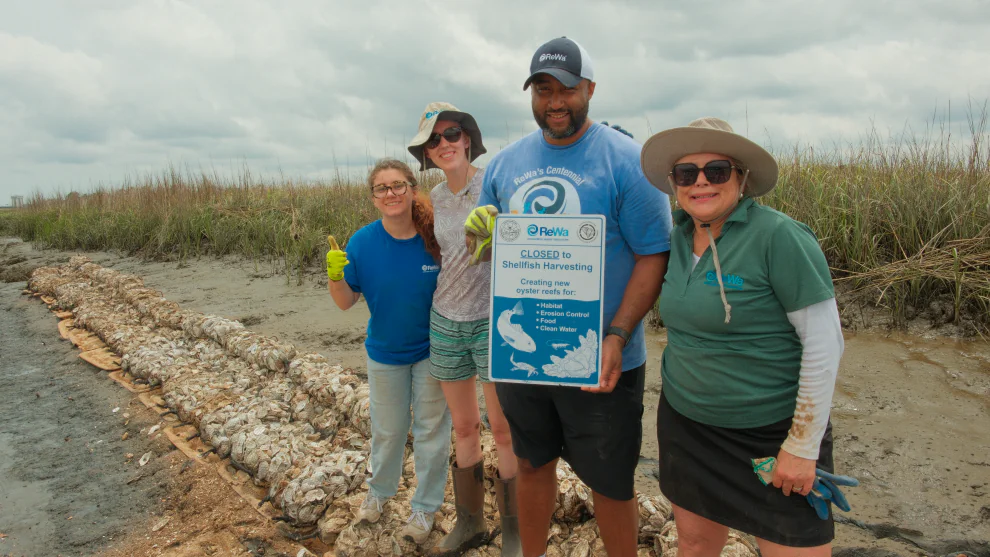
Oyster roasts are a hallowed South Carolina tradition, particularly along the coast. But many who grew up with the tradition often don’t realize the leavings of such a gathering are more than trash – the shells are a vital natural resource used to replenish oyster reefs.
Recognizing the importance of discarded oyster shells is one of the reasons Renewable Water Resources (ReWa) established its oyster shell recycling program in 2017. By building community support and key partnerships with restaurants, ReWa has contributed about 430,000 pounds to the state Department of Natural Resources oyster shell recycling and planting program.
Building a virtuous cycle
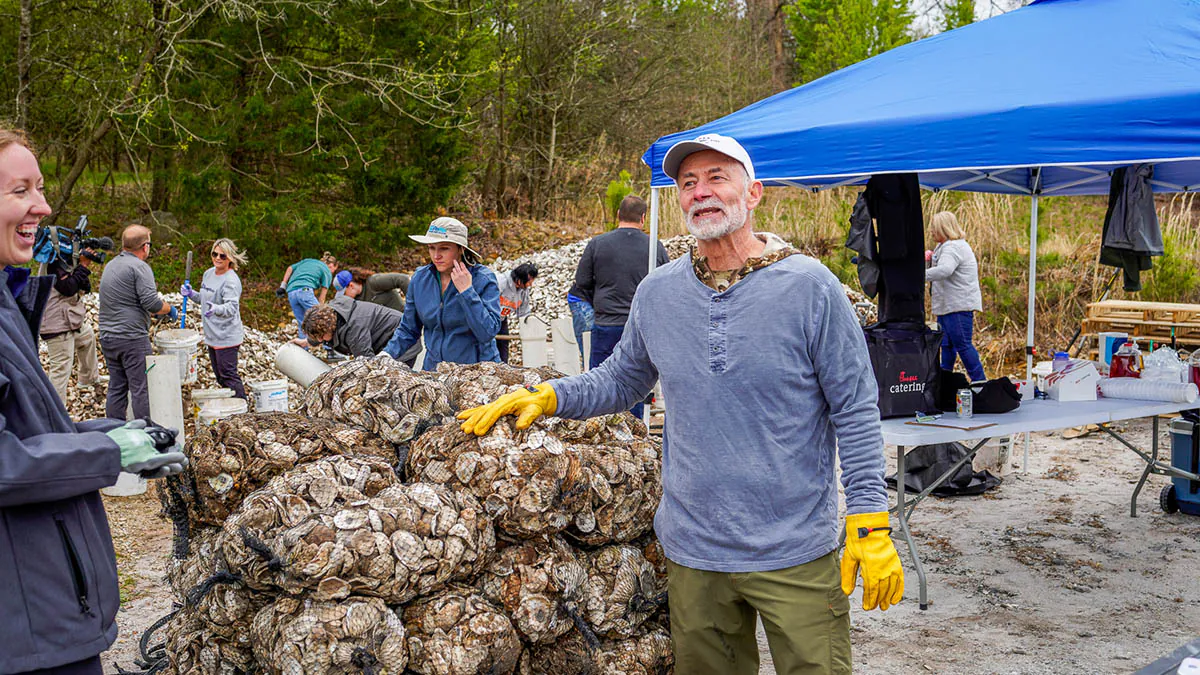 As a water resources utility, partnering with SCDNR’s South Carolina Oyster Recycling and Enhancement program was a natural fit for ReWa, according to Haley Denison, the ReWa watershed and natural resources specialist who coordinates the utility’s oyster shell recycling program.
In a very real sense, oysters perform a similar function to ReWa in filtering water and improving water quality. The animals inside oyster shells pull the nutrients they need to survive from the water surrounding them. At the individual level, the effect is tiny but multiplied by the hundreds and thousands of oysters that make up an oyster reef and the impact on water quality and the health of the surrounding ecosystem is profound.
“There are a lot of parallels,” Denison said. “(Oysters are) improving water quality, filtering up to 50 gallons a day from a single adult oyster once they’re mature.”
To many people, they’re also delicious.
Capitalizing on that fact was one of the reasons the Table 301 restaurant group opened The Jones Oyster Co. in late 2022. According to Steve Seitz, Table 301 vice president and chief operating officer, the restaurant and staff were committed from the start to recycling the thousands of discarded shells the restaurant generates every week.
But that would have been extremely hard, if not impossible, without ReWa’s shell recycling collection site near the intersection of Mauldin and Wenwood roads.
“I drive my pickup truck to the drop station up to three times a week on average,” Seitz said. “If it wasn’t available, I don’t know how we’d do it.”
Those three trips each week represent on average about 10,000-12,000 shells. The volume was so significant that ReWa had to significantly expand its drop-off site as soon as The Jones Oyster Co. started adding its shells to the program.
From the mountains to the sea
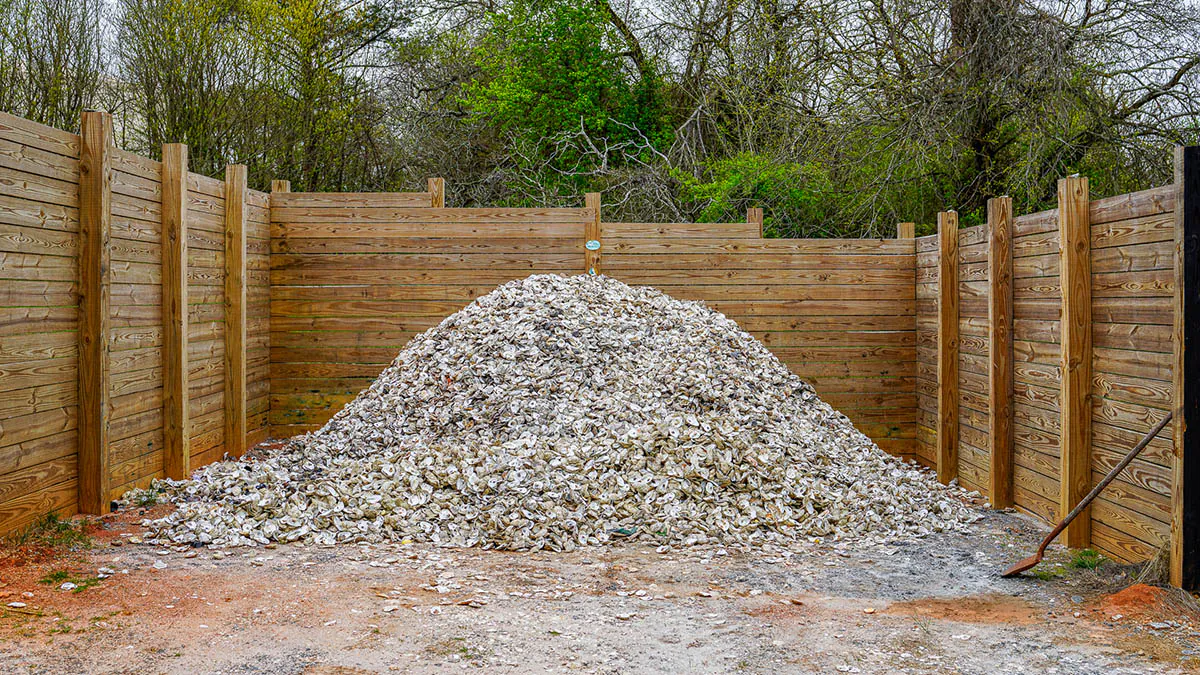 Even though Greenville is more than 200 miles from the coast, ReWa’s oyster recycling program represents a significant percentage of shells recycled through the SCORE program, according to Holly Sommers, SCDNR’s coordinator for the program.
Part of her job is educating the public about the critical importance of oyster shell recycling. Oysters need oyster shell to replenish themselves, Sommers said, and a healthy oyster reef is typically home to more than 120 species of fish and other marine animals.
Despite having one of the best shell recycling programs in the country, SCDNR has to purchase shells from shucking houses each year to accomplish its task of maintaining and replenishing oyster reefs all along South Carolina’s coast, Sommers said.
That’s expensive.
“(That’s why) it’s so important that we work with whoever we can throughout the state to recycle as much shell as possible,” she said.
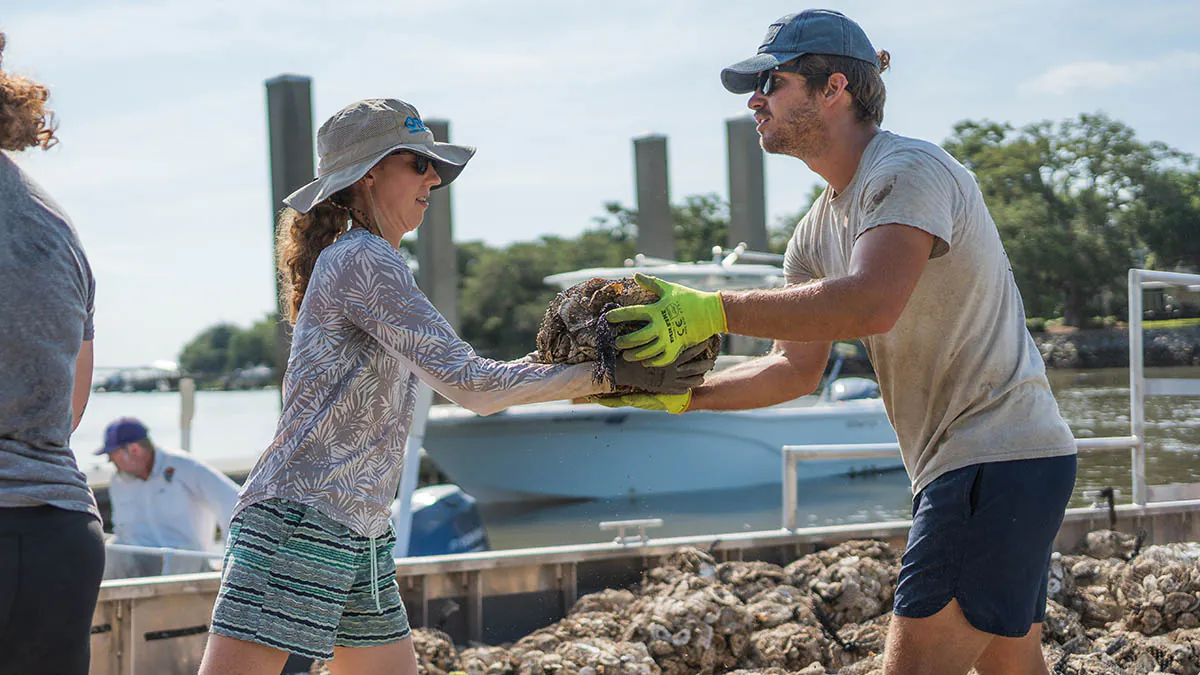
But beyond collecting recycled oyster shells, ReWa staff and volunteers transport the shells to the coast and participate in reef builds. According to Denison, seeing how the shells are returned to the sea to sustain and bolster marine ecosystems underscores the interconnectedness of the entire water cycle.
“Just from working in the water industry, you learn pretty quickly how connected all of your actions and your network really can be,” she said.
She added that every reef build has been rewarding and that each time she and the other volunteers learn something new. They also enjoy meeting other volunteers from all over the Palmetto State.
“People are always fascinated to learn where the shells are coming from, that even up in Greenville we’re still recycling the shells,” Denison said. “They love to hear about the efforts we’re doing, so it’s a good community-building experience.”
 Good to know:
The S.C. Department of Natural Resources’ oyster shell recycling and reef building program is funded through sale of saltwater recreational fishing licenses.
ReWa shell recycling, by the numbers
- Since it began in 2017, the program has recycled more than 429,495 pounds of oyster shells.
- ReWa volunteers used 13,125 pounds of shells collected this year for a reef build April 30 along Old Towne Creek in Charleston.
Why oyster recycling matters
According to SCDNR, the closure of most oyster canneries and shucking houses along the coast in recent decades has greatly reduced the amount of shells available to cultivate and restore the state’s oyster beds. Also, the increasing popularity of backyard oyster roasts and sale of by-the-bushel oysters have further reduced shell availability, as most of those shells tend to end up in a landfill.