Demand for housing continues to rise in Greenville as more people move to the city every year.
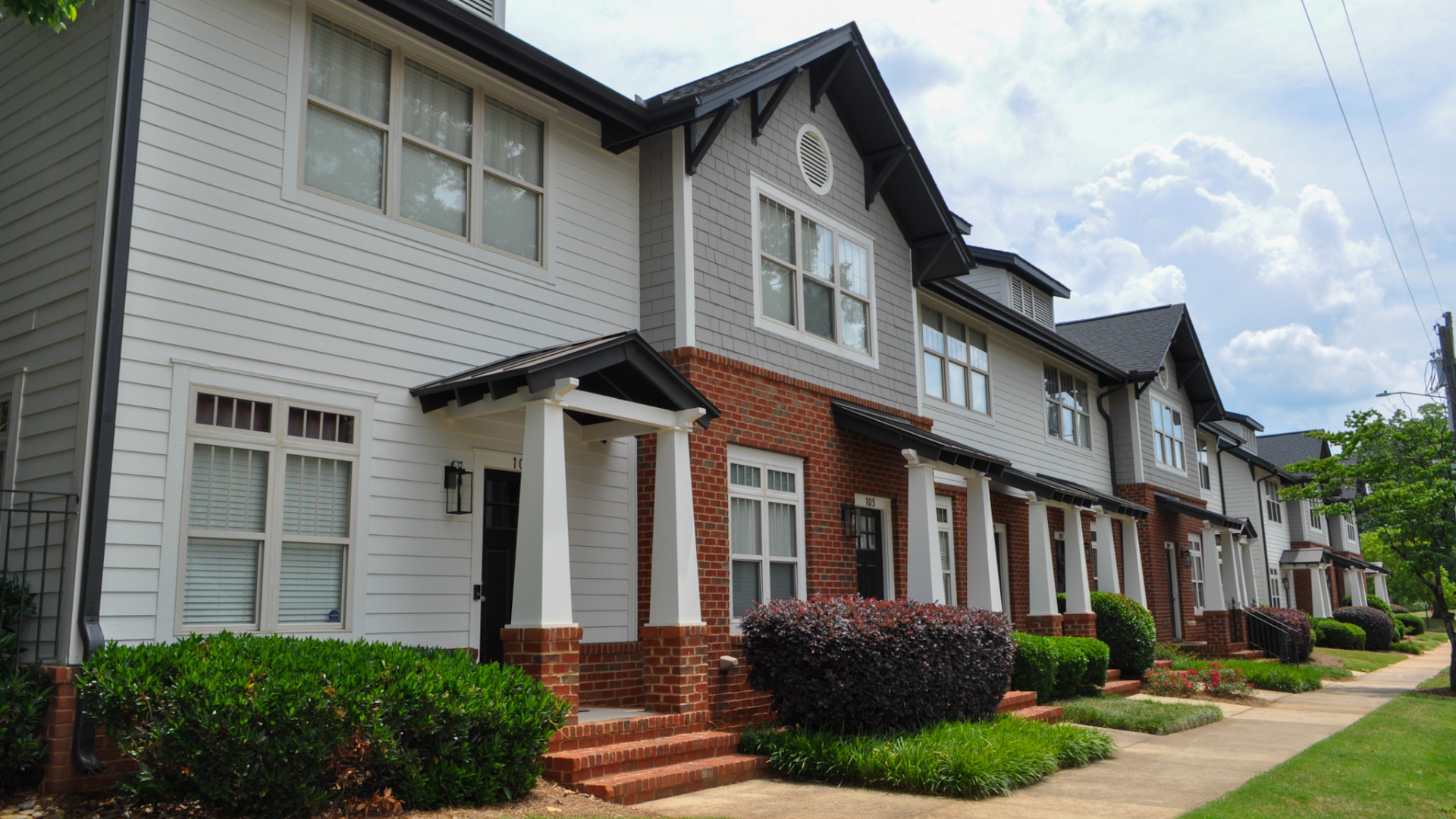
The city’s Planning and Development Department is exploring ways to expand Greenville’s housing supply by promoting the creation of missing middle housing. This concept refers to house-scale buildings containing multiple residential units. Examples include duplexes, triplexes, four-plexes, townhomes, cottage courts, courtyard apartments and similar developments.
Mary Douglas Hirsch, the city’s director of planning and development, said missing middle housing is “gentle density” that can be used for infill development within the city. Missing middle housing is ideal in walkable neighborhoods near retail, food, open space and other amenities. These housing types sit between detached single-family homes and high-rise apartments on the housing-density spectrum.
“We’re dusting off this concept as we’re looking at a variety of tools to achieve more housing. This is not the silver bullet,” Hirsch said.
Construction of these housing types has been widely missing in the United States since the early 1940s. Existing examples can be found in neighborhoods and historic districts across the city of Greenville, including in Hampton-Pickney, Greenline-Spartanburg and the West End.
Missing middle housing can appeal to a range of demographics, from empty nesters looking to downsize to young professionals. Greenville City Councilmember Tina Belge explained that this housing type can also provide more attainable options for middle-income households and create homeownership opportunities.
“We’ve gotten pretty imbalanced in our homeownership and rental in our city and homeownership is just not attainable for so many people,” Belge explained. “More missing middle housing is not only to lower price points so they can rent at a more affordable price, but maybe also purchase.”
Greenville housing study and planning
The concept of missing middle housing was reintroduced by Daniel Parolek, founding principal of California-based Opticos Design, in 2010. In 2019, the team at Opticos Design completed a two-part study of the regulatory barriers to creating these housing types in the city of Greenville and Greenville County. The study results and recommendations were presented to the Greenville City and County Councils in 2020.
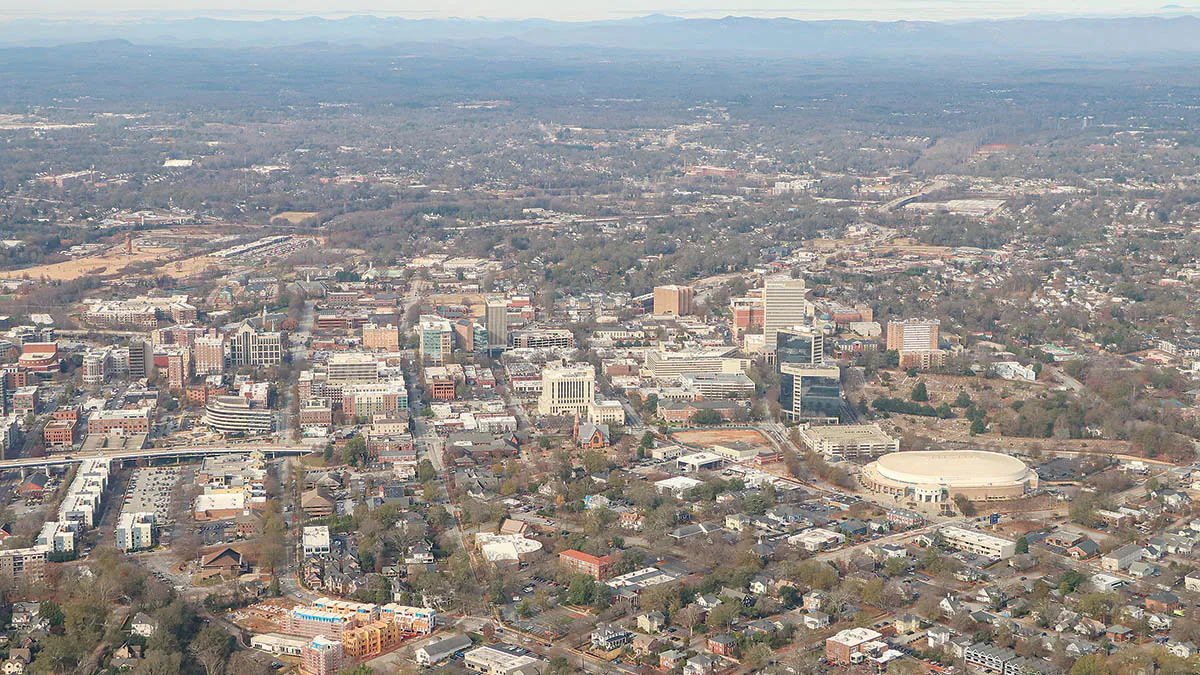
Hirsch said the study set the stage for the creation and adoption of the GVL2040 Comprehensive Plan in 2021. The plan promotes missing middle housing strategies and outlines areas within the city suitable for this housing type, such as around downtown Greenville, Augusta Street and the Village of West Greenville. A five-year update of GVL2040 is currently underway.
The city also overhauled its zoning and land development regulations to adopt the new Greenville Development Code in 2023. Existing zoning barriers restricting the creation of missing middle housing were removed from the new code. A new zoning category, Neighborhood-Scale Zoning Districts, was also created for these housing types.
Neighborhood-Scale Zoning Districts allow low-intensity housing options ranging from 2.5 to 3 stories tall. These buildings can accommodate between 4 and 12 residential units, with a 16-unit max when the development bonus is applied. This zoning type can be found in pockets throughout the city, often as a transition between single-family residential neighborhoods and commercial areas.
Despite the new zoning framework, city staff have not seen many missing middle housing options, outside of townhomes, being created in Greenville. The city invited Tony Perez, senior associate with Opticos Design, to visit Greenville in May to meet with city officials, developers and the community about missing middle housing.
Perez led a housing workshop with the city’s Planning Commission on May 13. Commission members discussed the current barriers that prohibit developers from building missing middle housing, such as financing issues, utility fees and building codes. Hirsch explained that the city will explore ways to mitigate these barriers for developers.
Planning staff is also interested in completing a pilot project for missing middle housing on city-owned land in partnership with a home builder. Hirsch explained that the project would help test out building this housing type to work through any hurdles. The pilot project would also create new housing for the community.
“Over the summer, we’re going to be exploring this more and figuring out what our next steps are, but planning will be following up with other departments at the city and our city council on next steps,” Hirsch said. “We’ve got good momentum and interest, so I’d like to continue the conversation.”
Definition of missing middle housing
“House-scale buildings with multiple units in walkable neighborhoods.”
Source: Opticos Design
Examples of missing middle housing
- Duplex
- Triplex
- Cottage court
- Townhome
- Multiplex
- Courtyard apartments
- Accessory dwelling units
- Live/work building
Missing middle housing study
Opticos Design, the architects behind the missing middle housing movement, completed a two-part study of the city of Greenville and Greenville County in 2019. The study was commissioned by Impact Greenville, a coalition consisting of the Greater Greenville Association of Realtors, Upstate Forever, the Greenville Housing Fund, Greenville Community Foundation and the city of Greenville.
Population growth
The city of Greenville had a total population of 79,396 residents in 2025. By 2030, the city’s population is projected to reach 85,616 residents.
Source: City of Greenville
***
Owner-occupied vs. renter-occupied units
Year: 2025
- Renter occupied: 56%
- Owner occupied: 44%
Year: 2030 (projected)
- Renter occupied: 54.5%
- Owner occupied: 45.5%
Source: City of Greenville